How Long Can You Leave a Dog Home Alone?
Most adult dogs manage about 4 to 6 hours alone, puppies far less. What actually decides it for your dog, what they need while you are out, and where a camera helps.
By Connected Home Team · Updated 15 July 2026
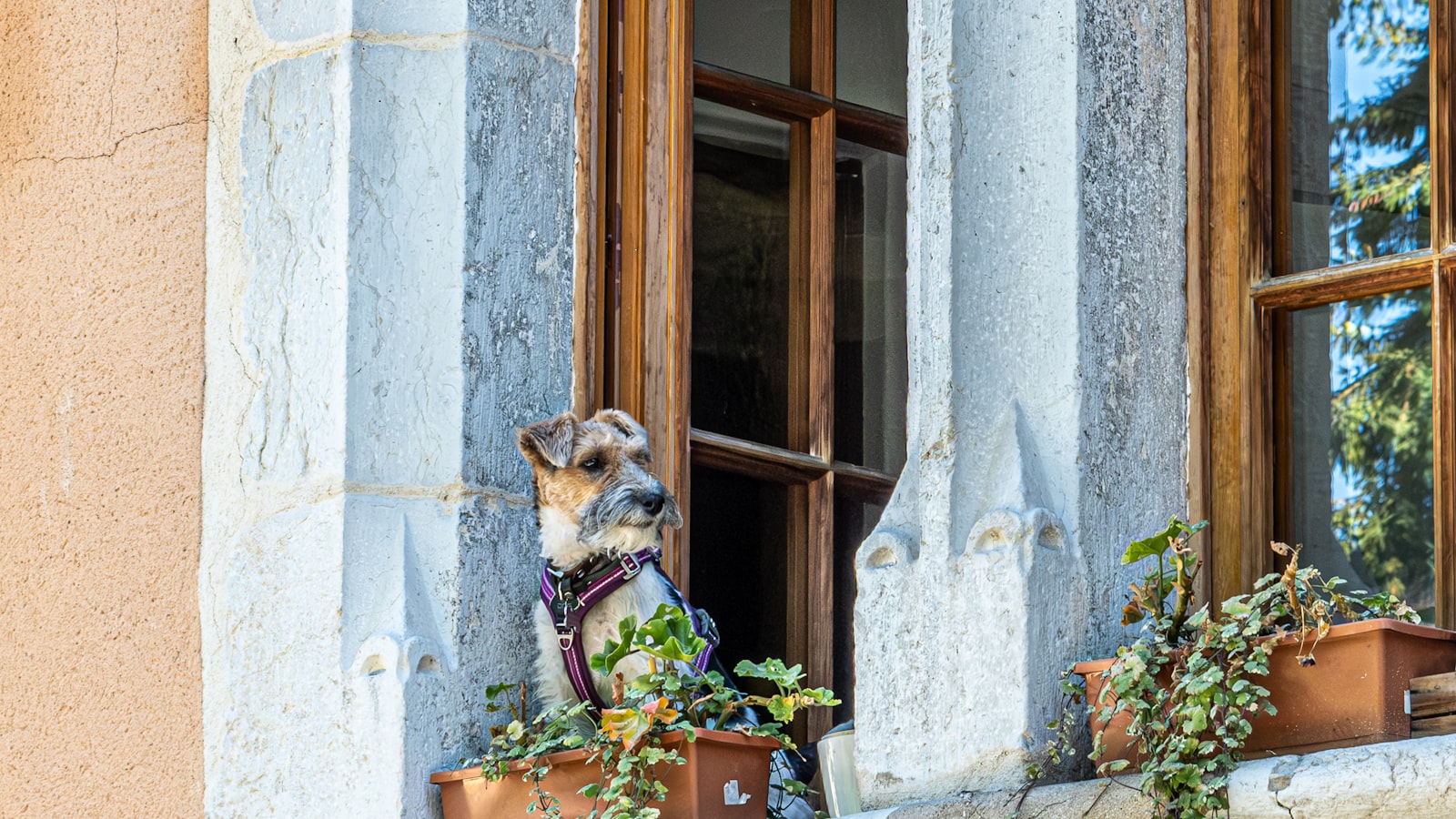
Most adult dogs should not be left alone for more than about four to six hours at a stretch as a routine. Puppies need far less, and a helpful rough rule is roughly one hour per month of age, up to that adult limit. Push much beyond it and you are asking a lot of a dog's bladder, and of how well they cope on their own.
How long your own dog can really handle depends on age, health, temperament and toilet needs. A senior with stiff joints struggles to wait longer than a young adult does. A dog prone to anxiety shows distress far sooner than an easy-going one. The numbers above are a starting point, not a promise.
How age changes the answer
Puppies under three months should rarely be alone for more than a couple of hours. Between three and six months you might stretch to three or four. By around six months most are closer to adult bladder control, though they still need more breaks than a grown dog.
Adult dogs, roughly one to seven years old, can usually manage four to six hours without distress, as long as their other needs are met. Some are happy for longer. Others get anxious sooner. It comes down to the individual dog.
Senior dogs, often from about seven depending on breed and size, tend to need more frequent breaks, whether from weaker bladder control or a medical condition. A stiff older dog also does better when it can get up and move around, instead of holding one position for hours.
What actually decides it for your dog
Age is only part of the picture. A dog walked hard in the morning with a recent toilet break settles far more easily than a restless one. An anxious dog needs a gentler setup than a placid one. A dog with a medical need, such as incontinence, diabetes that requires timed feeding, or joint pain, has real requirements that time alone simply cannot meet.
Before you head out, run through a quick check. Has the dog had a proper toilet break in the last hour? Have they had enough exercise or mental work to be ready to rest? Do they have a safe, familiar spot where they feel secure? Are they calm on their own, or do they wind up? If a dog is clearly distressed when left, or has accidents indoors despite being house-trained, talk to a vet or a trainer instead of assuming they will grow out of it.
What a dog needs while you are out
Leave fresh water in a bowl they cannot easily tip. Make sure the toilet break was recent, because that matters more than almost anything else. Give them a comfortable base, a crate they like, a bed, or a room they know well, so being alone feels safe instead of strange.
A dog left for hours with nothing to do will usually invent a job, and it is often a destructive one. A long-lasting chew or a puzzle toy stuffed with treats gives the mind and the mouth something better to work on. That is not entertainment for its own sake. It is how a dog gets through the stretch and keeps boredom from tipping into anxiety.
Signs your dog is not coping
Constant barking, howling or whining is the clearest tell that a dog is unhappy alone. So are destructive chewing, pacing, and accidents indoors from a dog who is otherwise house-trained. These often signal separation anxiety, and they are worth addressing early.
None of it is a character flaw. Some dogs are genuinely anxious on their own. A trainer can work through gradual desensitisation, and a vet can rule out a medical cause or suggest other options when training by itself is not enough.
Where a camera helps, and where it does not
If you have to be out longer than you would like, a pet camera like the Furbo 360 lets you see what your dog is actually doing. You can tell whether they are dozing or pacing, talk to them for reassurance, and on some models toss a treat. For peace of mind, and for catching when something has gone wrong, that is genuinely worth having.
What a camera cannot do is stand in for a toilet break, a walk or company. It reports how your dog is coping. It does not fix it. If you find yourself watching a dog that is plainly distressed, the camera has done its real job, which is to tell you the current arrangement is not working.
If you are out all day
Routinely leaving a dog alone for eight hours or more is hard on their welfare. If that is your day, build in help: a midday dog walker, a daycare, a trusted neighbour who can call in, or a change to your own hours where that is possible. Plenty of working owners stack two or three of these. The cost and the juggling are real, and so is what it does for your dog's quality of life.
Want the wider picture on where smart pet gear is worth it and where the running costs bite? Our guide to smart pet tech worth buying sorts the whole category by what it really costs to live with.
Affiliate note. The product links here are affiliate links and we may earn a commission at no extra cost to you. Commission never buys a recommendation. How we research and score.
Frequently asked questions
- How long can a puppy be left alone?
- Far less than an adult dog. A common rough rule is about one hour per month of age, so a three-month-old puppy should not be alone for much more than three hours. Puppies cannot hold their bladder for long and need frequent toilet breaks, along with the training and company that early months depend on. When in doubt, err well on the short side.
- Can I leave my dog alone for a full working day?
- Leaving a dog alone for eight hours or more on a regular basis is not ideal for their welfare, even if they can technically cope. Dogs need exercise, company and a toilet break through the day. If you work full days, look at a dog walker, daycare, a neighbour who can call in, or coming home at lunch. Many owners combine a couple of these.
- What are the signs my dog is not coping with being alone?
- Excessive barking or howling, destructive chewing, pacing, and indoor accidents by a dog who is normally house-trained are all common signs of distress. They often point to separation anxiety, which is worth taking seriously. A trainer can help with gradual training and a vet can rule out a medical cause, so it is worth asking for help early instead of waiting for a dog to get used to it.
- Does a pet camera mean I can leave my dog longer?
- No. A camera lets you check in and see whether your dog is settled or stressed, which is reassuring and genuinely useful. What it does not do is give them a toilet break, exercise or company. Treat it as a window onto how they are coping, not as a reason to stretch the hours.
Products mentioned
- Furbo 360° Dog Camera
A capable treat-tossing camera that plenty of owners are happy with, as long as you buy it knowing what the free version does. Watching live, talking to your dog, panning the camera by hand and tossing a treat all work without paying anything. The AI features Furbo is marketed on, activity and barking analysis, person detection and video history, need the Furbo Nanny plan at a recurring monthly fee. As a no-subscription camera it is a good 1080p pet cam that can throw kibble, which is a perfectly reasonable thing to want. The thing to understand before buying is how much of the sales pitch you only get once you start paying.
More on pets
- Are Automatic Pet Feeders Safe If the Power Goes Out?
An automatic pet feeder is safe in a power cut only if it has working battery backup. Here is what to check, and how to test the backup before you rely on it.
- Do Cat Water Fountains Need a Lot of Cleaning?
Yes, cat water fountains need real, regular cleaning: a rinse every few days, a full wash weekly, and a filter change roughly every 30 days. Here is what the upkeep involves.
- Do GPS Pet Trackers Work Without a Subscription?
A true cellular GPS tracker will not work without a subscription, because the fee pays for the SIM and mobile data. Here is why, and the fee-free option that has real limits.
- Do Pet Cameras Need a Subscription? What's Free, and What You Pay For
Nearly every pet camera works without a subscription. The plan buys recorded video and the AI alerts. Here is exactly what sits behind the paywall, and how to decide if you need it.
Affiliate disclosure: we may earn a commission when you buy through links on this page at no extra cost to you. Read our methodology.