Do Air Purifiers Help With Pet Hair? What They Actually Fix
Air purifiers do not remove pet hair from the floor. They catch airborne pet dander, which triggers allergies. Here's the split and what you actually need.
By Connected Home Team · Updated 16 July 2026
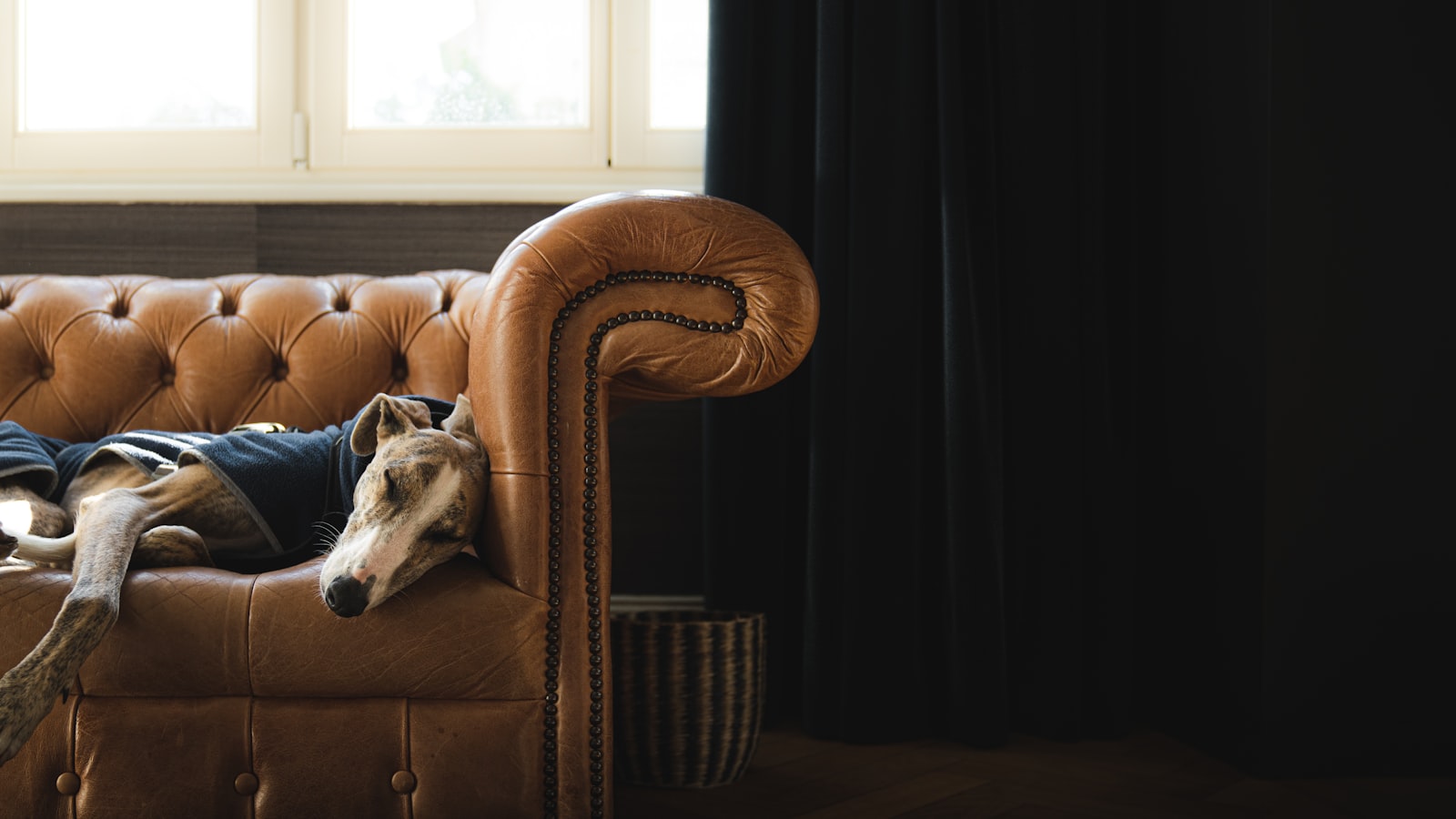
The answer to whether air purifiers help with pet hair is split, and the split is the useful thing to know. Pet hair itself, the visible stuff on your floor and sofa? A purifier does almost nothing about that. Pet dander, the microscopic skin flakes that actually trigger allergies? A purifier with a true HEPA filter captures that. The two are not the same problem, and buying the wrong solution is the most common way to waste money on clean air in a pet home.
Pet hair: mostly no
Pet hair and fur are heavy. They fall fast, and they land on the floor, the sofa, the bedding and the carpet, mostly within a few feet of the animal that shed them. An air purifier cleans the air that passes through it and nothing else. By the time hair has settled on a surface, the purifier has no way to reach it.
So the machine sitting in the corner never really gets a chance. It can catch the odd strand still drifting on its way down, which is not quite nothing, but the great majority of pet hair lands somewhere before it ever reaches the filter.
If hair on your floors and furniture is the problem, buy a vacuum. Ones built for pet hair have stronger brush rolls and filtration to cope with the load, and that is where the money actually does something. A purifier sold on a picture of a golden retriever is not built to solve this, and no amount of running it will change that.
Pet dander: yes, genuinely
Pet dander is different. Dander is the microscopic skin flakes that shed from your cat or dog constantly, and it is dander, not the visible fur, that triggers pet allergies in people. Those flakes are light enough to float in the air when they shed. They stay airborne for hours. That is exactly what an air purifier with a true HEPA filter is built to catch. For a deeper look at how purifiers help with allergies more broadly, see our guide on air purifiers and allergies.
Run a purifier sized for the room and it captures the dander passing through it. If you live with a pet and someone in the house wakes up sneezing or itchy-eyed, this is the half of the problem a purifier genuinely solves, and it earns its cost doing it.
It helps to know that the hair is mostly a delivery system. It carries dander around the house, but the thing your immune system objects to is the microscopic flake, not the strand. That is why the vacuum and the purifier are not competing purchases. Vacuuming lifts the settled, dander-laden debris off the floor before it gets stirred back into the air, and the purifier catches what is airborne while you sleep. They work the same problem from opposite ends.
The hidden cost in a pet home
A purifier in a pet home costs more to run than the same machine in a home without pets. The reason is filters, and it is a bigger cost than most people expect.
Both the Levoit Core 300S and Levoit Core 400S use a filter design where the HEPA layer and the activated carbon layer are bonded into a single part. This design is standard on most purifiers, and it has one consequence that matters in a pet home.
When the carbon layer saturates, it stops catching odours and starts to smell. At that point you have to replace the filter. You cannot wash HEPA filters and put them back because soaking destroys the microfibres that do the work. You cannot split apart a bonded filter to replace only the carbon and keep the HEPA. So you bin the whole thing and buy a new one.
In a normal home, the Levoit Core 300S filter lasts about 6 to 8 months, and Levoit says that window shortens with pets or smoke. The Core 400S is rated for 6 to 12 months under normal use, dropping to 4 to 6 months in homes with pets or smoke. Hair clogs the pre-filter stage, and living with an animal keeps the carbon working on odour continuously, so both halves of the filter age faster than the headline figure suggests.
There is a secondary issue on the smaller model. The Core 300S has no separate washable pre-filter. Some purifiers include a coarse washable first stage that you can rinse out and reuse, which stretches the life of the main filter. The Core 300S skips that, so there is no gentle way to extend filter life. Once you buy it, every 6 to 8 months you are buying a new genuine Levoit filter and there is no shortcut.
This is not a reason to avoid a purifier. It is a reason to know the true cost before you buy. A pet home is a pet home. The filter will saturate faster and cost more to run. Budget for that going in, and a purifier becomes a sensible decision or a waste of money depending on whether dander is genuinely your problem.
Sizing for a pet home
The sizing rules for pet homes are the same as for any home, with one addition. Work out the room size, match the purifier's coverage at a proper air-change rate, and you will have a machine that does the job without running flat out.
The short version, covered in more depth in our allergies guide: the big number on the box assumes the air gets cleaned once an hour, which is too slow to help. At the four to five air changes an hour you actually want for dander, real coverage lands around a quarter of the advertised figure. The Core 300S is advertised at 1,051 square feet and works out near 220. The Core 400S is advertised at 1,980 and lands in the few-hundred range.
Choosing between the two comes down to the room. The Core 400S suits a living room or an open-plan space where the pet spends its day, because it moves more air. The Core 300S suits a bedroom, where its 22 dB low setting is quiet enough to sleep beside and where an allergic sleeper gets eight uninterrupted hours of benefit. Both burn filters faster in a pet home, and that is simply what running one where dander and odour are live problems costs.
For more on sizing a purifier and weighing the running cost, see our guide to air purifiers and monitors. If pet hair on floors is the problem you are trying to solve, our guide to robot vacuums for pet hair covers a better solution. And for a broader look at smart-home devices worth owning in a pet household, see our smart pet tech guide.
Affiliate note. The product links here are affiliate links and we may earn a commission at no extra cost to you. Commission never buys a recommendation. How we research and score.
Frequently asked questions
- Does a purifier remove pet hair from the floor and sofa?
- No, it does not. Pet hair and fur are heavy and fall to the floor, the sofa, bedding and furniture where they sit. An air purifier only cleans the air that passes through it. It has no effect on hair that has already fallen and settled on surfaces. For pet hair on the floor, a vacuum is what you need. Some vacuums are designed specifically for pet hair and pick it up more efficiently. A purifier cannot do that job, and marketing that suggests otherwise is misleading.
- Will a purifier stop my home from smelling like dogs or cats?
- Partially, but not completely. Pet odour comes from two things. Volatile organic compounds in the air can be caught by the carbon layer in a purifier's filter, which does help reduce smell. What a purifier cannot do is address odour that is baked into carpets, furniture and bedding, which is where most of the smell sits. For the best result, wash pet bedding regularly, vacuum frequently and run a purifier to handle the airborne part. The carbon layer in a purifier will saturate faster in a pet home, so plan on replacing filters more often than the box suggests.
- Do I need a special pet-rated air purifier, or is it just marketing?
- It is mostly marketing. There is no special category of purifier designed only for pets. What matters is that the purifier has a true HEPA filter, which captures the microscopic dander that actually triggers pet allergies. Any purifier with proper HEPA filtration works equally well for dander. What changes in a pet home is not the machine, but how you run it and how often you replace the filter. Hair clogs the pre-filter faster, the carbon layer saturates sooner because of odour, and the machine as a whole has a higher running cost. Buy a good purifier sized for your room and budget for faster filter replacement. That is all you need.
- Do pet homes need to replace filters more often?
- Yes, and it is the running cost people forget to budget for. The Levoit Core 400S is rated for roughly 6 to 12 months of normal use, dropping to 4 to 6 months in homes with pets or smoke. The Core 300S is rated at about 6 to 8 months, sooner with pets. Hair clogs the pre-filter stage and speeds the whole timeline up. Both models also bond the HEPA and carbon layers into a single part, so when the carbon saturates on pet odour you replace the whole filter even if the HEPA still had months left in it. The machine is the small cost. The filters are the real one, and in a pet home they arrive faster.
Products mentioned
- LEVOIT Core 400S Smart Air Purifier
Buy this if you want to clean the air in a large room and you value smart control and strong particle removal. It is a lot of purifier for the money. The hidden cost is the filter. Plan on replacing it every 6 to 12 months, sooner if you have pets or a smoker in the house, and each one is a genuine Levoit part you keep buying for the life of the unit. The bonded filter is the honest trade-off for the compact cylindrical shape, and it means the odd unnecessary carbon swap. If you mostly run it flat out, the noise at maximum speed will bother you, so size the purifier to the room instead of pushing a small unit hard.
- LEVOIT Core 300S Smart Air Purifier
Buy this for a bedroom, a nursery or a small office, where its quiet running and genuine auto mode matter most. Ask it to clean a living room and it will run flat out and still struggle, so match it to the room. The hidden cost is the filter, the same as on every Levoit. Plan on a replacement every 6 to 8 months or so, sooner with pets or smoke, and each one is a genuine Levoit part. Because the carbon and HEPA are a single bonded unit, you sometimes bin a HEPA layer that still had life in it. Within a small room and with that running cost understood, it is very easy to live with.
More on clean air
- Do Air Purifiers Help With Allergies? What They Actually Fix
Air purifiers clean airborne pollen and dust. But most allergy misery comes from dust mites in your bed. Here's what a purifier solves and what it doesn't.
- Do Air Purifiers Remove Cooking Smells?
Air purifiers trap cooking smoke but remove smells only through activated carbon, which saturates fast in kitchens. Here's where a purifier actually helps.
- Do You Need to Test for Radon? It Depends on Where You Live
Test for radon only if your area has it. Here's how to know if you need to, and whether a cheap kit or a smart monitor makes sense.
- Should You Run an Air Purifier All Night? Yes, If It's Quiet Enough
Run a purifier overnight in your bedroom: eight hours breathing filtered air makes the biggest impact, if the machine stays quiet enough to sleep beside.
Affiliate disclosure: we may earn a commission when you buy through links on this page at no extra cost to you. Read our methodology.