Should You Run an Air Purifier All Night? Yes, If It's Quiet Enough
Run a purifier overnight in your bedroom: eight hours breathing filtered air makes the biggest impact, if the machine stays quiet enough to sleep beside.
By Connected Home Team · Updated 16 July 2026
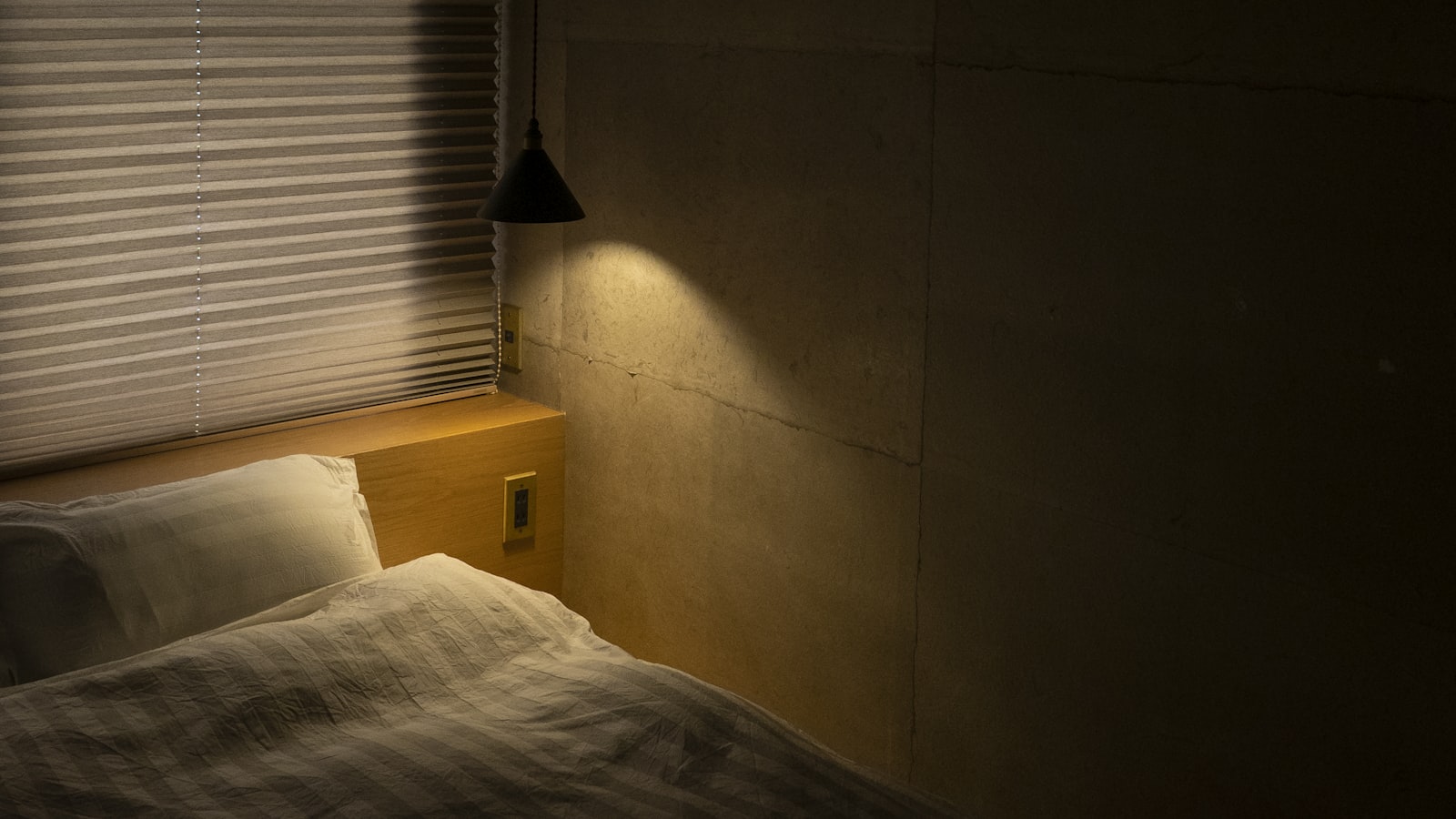
Yes, run it all night. The bedroom is where an air purifier does the most good, and overnight is when it has the most time to do it.
You spend roughly eight unbroken hours in that space while you sleep, breathing the same recycled air over and over. A purifier running through those eight hours catches and filters a lot of what goes into your lungs. That is the science and the case for overnight running in a sentence.
The catch is noise. A purifier you can hear all night is a purifier you will turn off, and a purifier that is off does nothing. So the choice boils down to a single question: Is your machine quiet enough to live beside while you sleep?
The noise question decides it
Noise matters more than power for overnight running. You care less about airflow capacity at night, because you are in one closed room for eight hours. You care a lot about whether the machine lets you sleep.
A purifier sized right for your bedroom can stay quiet all night. The Levoit Core 300S runs at 22 decibels on its lowest setting. That is about as loud as a whisper or the rustling of leaves. You can sleep beside it.
The Levoit Core 400S is a larger machine, designed for living rooms, and on its lowest setting it runs at around 24 decibels. Still quiet enough for sleep in most cases.
Both machines get louder at higher speeds. The 300S reaches about 50 decibels at top speed, and the 400S gets to roughly 52 decibels. That is the level of quiet conversation, and it will wake you. But here is the thing: if your purifier is properly sized for your bedroom, it should not need to run at top speed overnight. Auto mode will keep it idle and quiet as long as the air stays clean.
A machine that is too small for the room is the problem. Push a purifier designed for a bedroom into a living room and ask it to keep the air clean, and it will run flat out all night just trying to keep up. That is why sizing matters. Get the right machine for the space, set it to auto mode, and overnight running becomes practical.
Why overnight is the highest-value time
Eight hours is a long time. Think of it this way: you sleep in a closed bedroom with the door shut. The purifier in that space is working through the entire night, catching particles that would otherwise settle on your pillow and your sheets and the air you breathe.
Run the same purifier in your living room during the day and it is a useful thing, but you are not there full-time. You come and go. The air improves while you are sitting there, but it starts over again when you leave.
A bedroom at night is different. You are trapped in that room, in that air, for hours. A purifier running there catches particles continuously through a window of time when you have no other choice. That is where a purifier earns its place in your home.
For allergies in particular, overnight is the shift that matters. If pollen or pet dander is your problem, this is eight hours of filtered air during the longest continuous stretch you spend in any room, set against eight hours of breathing whatever happens to be floating in there. Our allergies guide goes further into what a purifier can and cannot reach, including the large share of allergy trouble that lives in your mattress and never enters the air at all.
Running cost in watts
A purifier is a low-power device. The Core 300S is rated at 23 watts, with a low standby draw. The Core 400S is rated at about 38 watts flat out, and under 2 watts on standby. Those are the ceilings, and on auto mode overnight a properly sized machine spends most of the night well below them.
Put that in context. A 23 watt device left on for eight hours uses less energy than most light bulbs did a decade ago, and far less than anything with a heating element in it. Electricity prices vary enormously by country, so we are not going to put a figure on it. Take the watts, find what your supplier charges per kilowatt-hour, and the sum takes ten seconds. It will be small.
The real running cost is the filter, not the electricity. Plan on replacing a filter every six to eight months for the Core 300S or six to twelve months for the Core 400S. That is the cost that stacks up over years of ownership, and it is the one that matters when you decide whether overnight running makes sense for your home.
Auto mode and sleep mode
Both purifiers include a real particle sensor and an auto mode that responds to the actual air quality in the room. That is crucial for overnight use. The fan idles down when the air is clean and speeds up when it detects particles, so the machine does the right thing without you managing it.
Many purifiers also include a sleep mode that dims the lights and runs at a preset quiet speed. If you are bothered by display brightness in the dark, sleep mode is a useful option. It keeps the machine quiet without you having to set a timer or schedule in the app.
Auto mode is the smarter choice for overnight. The purifier senses what the room needs and responds. You set it and it does its job.
What a purifier does not do
A purifier cleans the air of particles. It does not touch carbon dioxide, and it does not fix a stuffy room. If your bedroom feels airless at night, the problem is not particles. The problem is CO2 building up in a closed space with no fresh air coming in.
Opening the window solves that. A purifier does not. So if stuffiness is your complaint, do not buy a purifier hoping it will fix that. It will not. Air that tastes flat and a room where you feel foggy comes from high CO2, and the answer is ventilation, not filtration.
A purifier is the right tool for particles: pollen, dust, pet dander, smoke. It is not the right tool for the air itself, and that is an honest thing to say before you spend money on one.
The overnight case
Overnight running in the bedroom makes sense if the machine is quiet enough to sleep beside. A Core 300S on auto beside the bed is about the most practical use an air purifier has: eight hours of quiet, automatic particle removal in the room where you breathe the same air longest, at a running cost measured in watts. Whether that translates into sleeping better is your call to make, not a promise we can make for you. What the machine reliably does is take particles out of the air. If particles are what has been bothering you, that is the whole point.
For more on sizing a purifier to your room and weighing the filter cost, see our guide to air purifiers and monitors.
Affiliate note. The product links here are affiliate links and we may earn a commission at no extra cost to you. Commission never buys a recommendation. How we research and score.
Frequently asked questions
- Is it safe to leave a purifier running unattended overnight?
- Continuous running is the normal way these machines are used, and both Levoit models ship with app scheduling and timers, so you can have one run for eight hours and stop on its own if you would rather it did. Follow the manual on placement, give the intake and outlet clear air rather than pushing the unit against a wall or under bedding, and use the manufacturer's own filters. The part that wears is the filter, which you replace on schedule regardless. The practical worry overnight is not safety but noise, because a purifier you can hear is one you will switch off, and one that is off does nothing at all.
- Is it loud enough to disturb sleep?
- That depends entirely on the model. A purifier sized right for your bedroom and running on its lowest setting can be very quiet. The Levoit Core 300S idles at about 22 decibels, which is comparable to a whisper or a soft rustling, and you can sleep through it. The Core 400S runs at around 24 decibels on low. At top speed both machines get considerably louder (50 to 52 decibels), but if your purifier is properly sized for the room it should rarely need that speed, because the auto mode will idle it down when the air is clean. A small machine crowded into a large room will run flat out and will definitely wake you. Size it right and overnight running becomes practical.
- Does running it all night wear out the filter faster?
- Yes, somewhat. A filter stretched across overnight running will clog faster than one that runs only during the day. The life of a filter in a Levoit purifier is typically six to eight months for the Core 300S and six to twelve months for the Core 400S under normal use, and that clock starts the moment you first switch it on. If you run it overnight as well as during waking hours you will probably replace the filter sooner rather than later. That is not a reason to avoid overnight running. It is a reason to know what you are signing up for when you buy, and to factor filter cost into the purchase decision before you get home.
- Should I run it on auto or a fixed speed at night?
- Auto mode is the better choice overnight. Both purifiers carry a real particle sensor that measures the actual air quality in the room and adjusts the fan to match. When the air is clean, auto mode idles the fan down to its quietest setting, which is what you want for sleep. When dust or pollen climbs, it speeds up. That responsiveness is why the auto mode matters most at night, because you are breathing the same air in the same closed room for eight hours. The purifier can sense when there is more work to do and handle it without you managing it. Setting a fixed high speed is wasteful. The fan runs hard all night whether the room needs it or not, the noise never stops, and you chew through the filter faster.
Products mentioned
- LEVOIT Core 300S Smart Air Purifier
Buy this for a bedroom, a nursery or a small office, where its quiet running and genuine auto mode matter most. Ask it to clean a living room and it will run flat out and still struggle, so match it to the room. The hidden cost is the filter, the same as on every Levoit. Plan on a replacement every 6 to 8 months or so, sooner with pets or smoke, and each one is a genuine Levoit part. Because the carbon and HEPA are a single bonded unit, you sometimes bin a HEPA layer that still had life in it. Within a small room and with that running cost understood, it is very easy to live with.
- LEVOIT Core 400S Smart Air Purifier
Buy this if you want to clean the air in a large room and you value smart control and strong particle removal. It is a lot of purifier for the money. The hidden cost is the filter. Plan on replacing it every 6 to 12 months, sooner if you have pets or a smoker in the house, and each one is a genuine Levoit part you keep buying for the life of the unit. The bonded filter is the honest trade-off for the compact cylindrical shape, and it means the odd unnecessary carbon swap. If you mostly run it flat out, the noise at maximum speed will bother you, so size the purifier to the room instead of pushing a small unit hard.
More on clean air
- Do Air Purifiers Help With Allergies? What They Actually Fix
Air purifiers clean airborne pollen and dust. But most allergy misery comes from dust mites in your bed. Here's what a purifier solves and what it doesn't.
- Do Air Purifiers Help With Pet Hair? What They Actually Fix
Air purifiers do not remove pet hair from the floor. They catch airborne pet dander, which triggers allergies. Here's the split and what you actually need.
- Do Air Purifiers Remove Cooking Smells?
Air purifiers trap cooking smoke but remove smells only through activated carbon, which saturates fast in kitchens. Here's where a purifier actually helps.
- Do You Need to Test for Radon? It Depends on Where You Live
Test for radon only if your area has it. Here's how to know if you need to, and whether a cheap kit or a smart monitor makes sense.
Affiliate disclosure: we may earn a commission when you buy through links on this page at no extra cost to you. Read our methodology.