Do You Need to Test for Radon? It Depends on Where You Live
Test for radon only if your area has it. Here's how to know if you need to, and whether a cheap kit or a smart monitor makes sense.
By Connected Home Team · Updated 16 July 2026
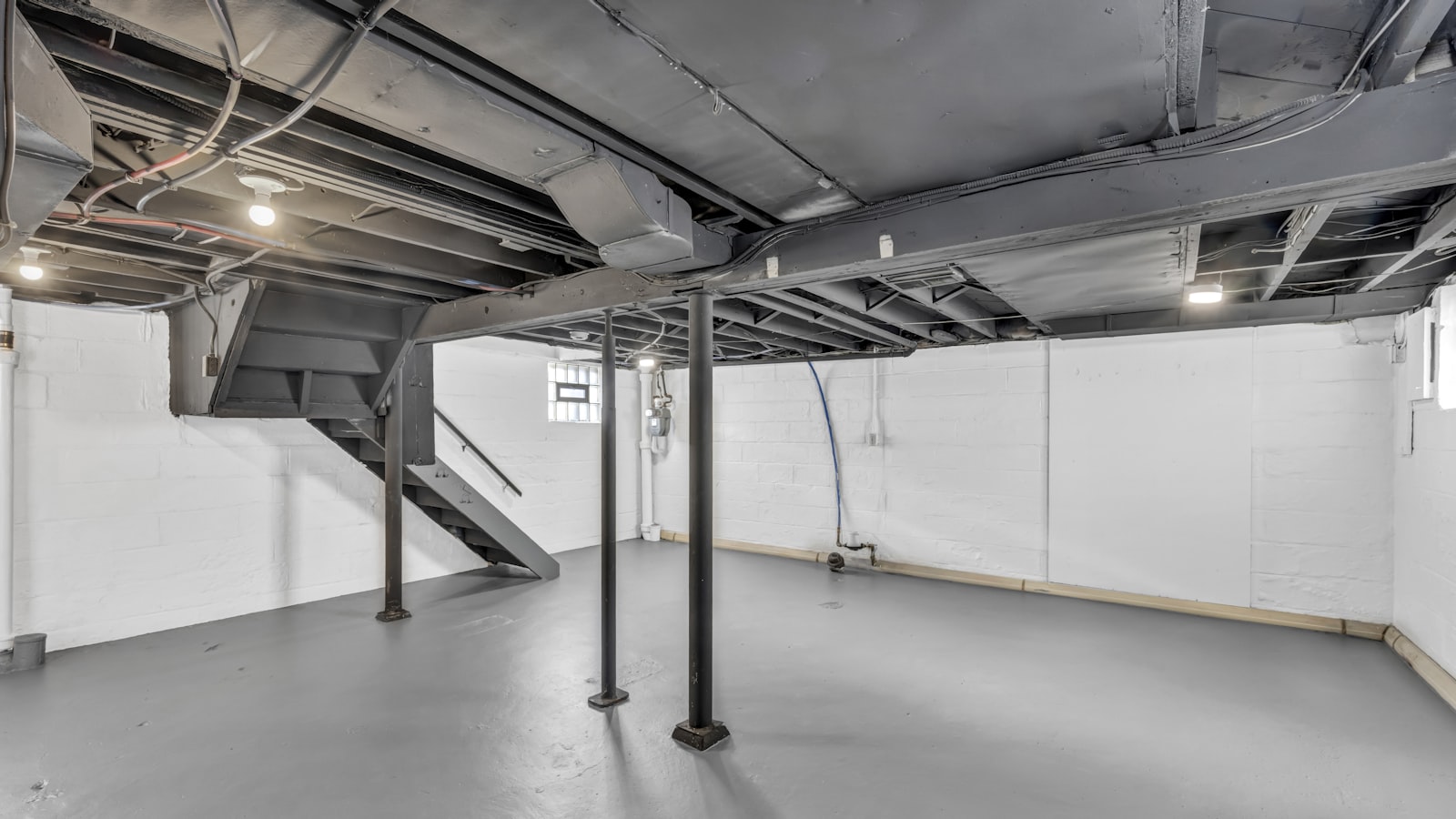
Radon is an invisible radioactive gas that comes from the natural decay of uranium in rock and soil. When it seeps into your home through the foundation and floor, it accumulates indoors where you cannot see it, smell it, or feel it. That invisibility is the entire reason radon needs measuring. You have no other way to know it is there.
The honest first question is whether radon is likely to be a problem where you live, and the answer is almost entirely geology. It depends on what is in the rock and soil beneath your feet, which means levels vary by country, by region, and sometimes between one street and the next. Your housekeeping has nothing to do with it. The way to find out is your national radon map, which is published precisely so people can check, and which costs nothing to look at. Start there, before you spend anything.
If your area is known to be low radon, you probably do not need to test at all. If it is high, or if you are moving into a new home and do not know, testing makes sense. Your national radon authority will have published an action level, the limit above which radon becomes a health concern in your country. That threshold differs by country because the radiological risk is the same everywhere, but countries make different policy choices about what level to act on. The only way to know your own country's action level is to look it up. Do not assume.
The cheapest path: a simple test kit
For most people, a basic short-term radon test kit answers the question in a straightforward way. You buy one, place it in the lowest room of your home, run it for a few days, send it back to the lab, and get a reading back. It costs little. It is accurate enough for the yes-or-no question of whether you are above or below your country's action level. If you are below, you have your answer and you are done. If you are above, you know you have a problem and you can call a professional to install mitigation.
A short-term kit is also faster than a continuous monitor. It runs for days, not weeks. If you are a homebuyer trying to decide whether to commit to a property before closing, a quick test answers the question in the timeframe you need.
The only reason to spend more on a smart monitor is if you want to watch radon over a long stretch, or if you have had a mitigation system installed and want to confirm it is working. For a one-off check, a cheap kit is the right tool.
If you want the long-term picture: a continuous monitor
The Airthings View Plus is one of the very few consumer air monitors that measures radon at all. Most do not, and that is the single reason this one stands out. It measures radon alongside CO2, fine particles, volatile organic compounds, humidity, temperature and air pressure, showing them on a clear e-ink display you can read from across the room.
The catch on radon is baked into the science. The gas is not uniformly distributed in the air, and a single reading at a moment in time means almost nothing. The Airthings needs two to three weeks of readings before the radon figure becomes trustworthy enough to act on. That makes it a patient, long-term instrument, not a quick check. If you are in a hurry, a test kit is faster and better suited to the job.
When radon monitoring earns its place is when you already know radon is a concern where you live and want to understand your home's pattern over time. If you have had a mitigation system installed, a monitor lets you verify it is working. If you are doing home improvements and want to track how they affect your radon level, a monitor captures that story over weeks and months. For that kind of long-term watch, the Airthings is hard to beat because almost no other consumer monitor even tries to measure radon.
The price is roughly double that of a good multi-sensor monitor that skips radon. If radon is not a real concern where you live, you are paying for a sensor you will not use. If it is, the cost is probably worth it for the clarity and the ability to spot changes.
Important: a purifier will not fix radon
This needs to be plain because people often assume any air-cleaning gadget fixes any air problem. A purifier does not remove radon. Radon is a gas and a radioactive one. A HEPA filter catches particles. It does nothing against radon.
The only way to address radon is to prevent it getting into your home in the first place, through proper ventilation, or to remove it once it is inside through sub-slab depressurisation, a technique where a professional installs a system to draw radon from beneath the foundation and vent it outside above the roofline. That is a real construction job, not a gadget you can buy. If radon is above your country's action level, call a professional who specialises in radon mitigation.
What else is worth measuring
The Amazon Smart Air Quality Monitor is the budget option for everyday awareness. It reads fine particles, volatile organic compounds, carbon monoxide, humidity and temperature, and it works best as a trigger, kicking off an Alexa routine that switches a purifier on when particles climb. Two honest catches. It has no screen at all, so every reading lives in the Alexa app or comes out of an Echo when you ask. And its carbon monoxide reading is indicative only. It is not a certified CO alarm and must never be used as one. If you want a CO alarm, buy a CO alarm.
It does not measure CO2, and it does not measure radon.
If radon is the reason you are looking for a monitor, the Amazon device will not help you. It does not measure radon at all. The Airthings is the one consumer monitor with that capability.
Where to go from here
Check your national radon authority for your local radon risk and your country's action level. If radon is likely in your area, buy a short-term test kit and run it in your lowest room to get a clear answer. If the reading is above your action level, contact a radon mitigation professional. They will carry out further testing and install the ventilation or sub-slab system your home needs.
If you want to monitor radon over time, or if you are buying a home and want a thorough long-term picture of the air before you move in, the Airthings View Plus is the monitor to choose. It is expensive compared to models that skip radon, but radon is what makes it special, and if that is your concern it is worth the cost.
For more on air monitors and purifiers, see our guide to air purifiers and monitors.
Affiliate note. The product links here are affiliate links and we may earn a commission at no extra cost to you. Commission never buys a recommendation. How we research and score.
Frequently asked questions
- Does an air purifier remove radon?
- No, it does not. This is the single most important thing to know about radon and air-cleaning gadgets. A purifier with a HEPA filter captures particles, and it does nothing about radon because radon is a gas and not a particle. Radon is also radioactive, which means a purifier cannot simply trap and dispose of it. Radon comes from the ground and gets into your home through cracks and gaps in the foundation and floor. The only way to fix it is to prevent it getting in through proper ventilation and sub-slab depressurisation, which is a job for a qualified professional. An air-cleaning gadget will never be the answer to a radon problem.
- Is a cheap radon test kit good enough?
- Yes, for most people it is the right first step. A short-term kit from a hardware shop costs very little and tells you straightforwardly whether radon is above your country's action level. If you want to know whether you have a problem, a cheap kit answers that question. A continuous smart monitor is useful if you already know radon is an issue where you live and want to watch it over months or years, or if you have had a mitigation system installed and want to check that it is working. But to answer the basic yes-or-no question, a simple test kit does the job.
- How long does a radon reading take to be meaningful?
- A short-term test kit usually runs for two to seven days, depending on what you buy, and the reading you get is reasonable for a quick answer. A continuous monitor is different. The Airthings View Plus, for example, needs two to three weeks of data before the radon reading settles into something trustworthy. That is a real constraint if you are in a hurry, such as before a house purchase. For that reason a short-term kit is faster and a better fit for a quick decision. A continuous monitor earns its place when you want the long-term picture, not the quick answer.
- Which rooms should I measure for radon?
- Start in the lowest occupied space of your home, which for most people is the basement if you have one, or the ground floor. Radon seeps up from the soil, so it accumulates most in spaces closest to the ground. You can measure multiple rooms if you want, but the basement is the priority. Some countries or regions have specific guidance on where to test, so check your national radon authority. For a short-term test kit, place it in the room you want to check and follow the kit's instructions on exposure time and where to position it. A continuous monitor can stay in one room or move around, depending on what you are trying to learn.
Products mentioned
- Airthings View Plus Air Quality Monitor
Buy this if radon is a real concern where you live, or you are moving into a home and want to know before you commit. For that job it has almost no rival at this level. If you do not care about radon, a cheaper multi-sensor monitor covers the rest of what it does for a lot less. Two honest catches. The price is high for something that only measures and never cleans the air. And the headline sensor, radon, needs two to three weeks of data before the number is trustworthy, so patience is part of the purchase. Taken for what it is, a careful long-term watch on your indoor air, it is excellent.
- Amazon Smart Air Quality Monitor
Buy this if you already live in an Alexa home and just want a sense of whether your air is clean, without spending much. The missing screen is the defining trade-off. You cannot glance at a wall display, so the numbers stay hidden until you open the app or ask an Echo. It works best as a trigger, kicking off a routine that switches on a purifier when PM2.5 climbs, and less well as an instrument you read off directly. Do not lean on its carbon monoxide reading for safety, because it is not a certified CO alarm. If you want CO2 or a display you can see across the room, spend more and look elsewhere.
More on clean air
- Do Air Purifiers Help With Allergies? What They Actually Fix
Air purifiers clean airborne pollen and dust. But most allergy misery comes from dust mites in your bed. Here's what a purifier solves and what it doesn't.
- Do Air Purifiers Help With Pet Hair? What They Actually Fix
Air purifiers do not remove pet hair from the floor. They catch airborne pet dander, which triggers allergies. Here's the split and what you actually need.
- Do Air Purifiers Remove Cooking Smells?
Air purifiers trap cooking smoke but remove smells only through activated carbon, which saturates fast in kitchens. Here's where a purifier actually helps.
- Should You Run an Air Purifier All Night? Yes, If It's Quiet Enough
Run a purifier overnight in your bedroom: eight hours breathing filtered air makes the biggest impact, if the machine stays quiet enough to sleep beside.
Affiliate disclosure: we may earn a commission when you buy through links on this page at no extra cost to you. Read our methodology.