Smart Thermostats: What to Check Before You Buy
The one smart device where compatibility is genuinely hard. What kind of heating you have decides what you can fit, and it varies enormously by country.
By Connected Home Team · Updated 12 July 2026
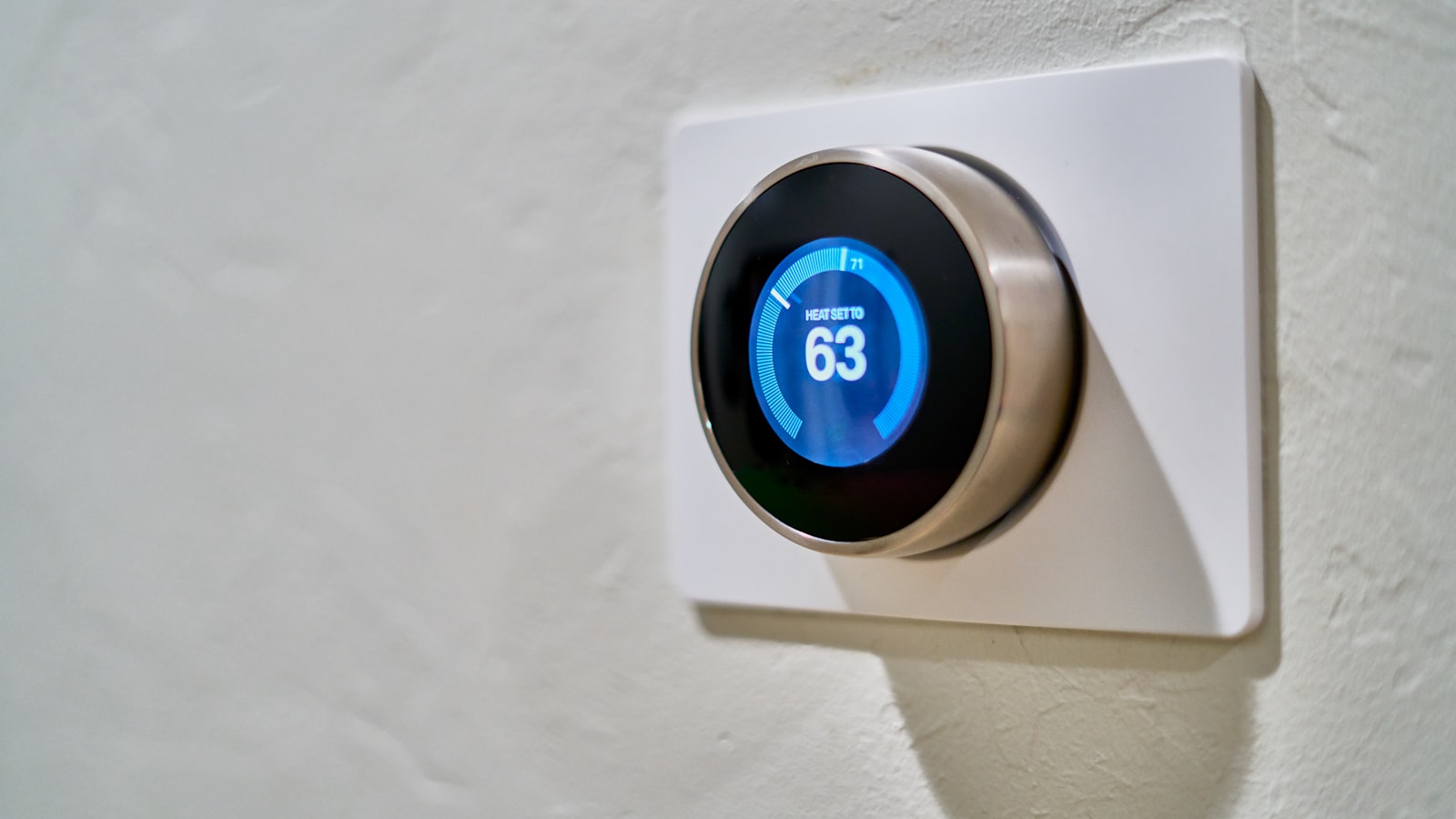
Most smart home devices work anywhere. You plug them in, they join the Wi-Fi, and the worst that happens is a fiddly setup.
A thermostat is not like that. It wires into a heating system that was designed decades ago, to standards that differ from country to country and sometimes from house to house. This is the one category where "will it even work in my home?" is a real question with a real chance of the answer being no, and it's the reason this guide spends more time on compatibility than on features.
Our picks are further down, but read the compatibility section first. Choosing the wrong thermostat for your heating system is the mistake that actually costs people money here, and no amount of reviewing changes it.
Start here: what kind of heating do you have?
Everything follows from this, and it is where international advice usually falls apart. A guide written for one market will confidently tell you about wiring that doesn't exist in yours.
Central heating driven by a boiler, common across the UK, Ireland, and much of Europe, typically has a thermostat that switches the boiler and, separately, controls for hot water. Smart thermostats here replace the room thermostat and often the programmer, and many communicate with the boiler over a dedicated link rather than a simple on/off switch.
Forced-air systems with separate heating and cooling, the norm across North America, use a low-voltage control board with several wires running to the thermostat. This is where the famous C-wire question comes from, and it is largely a North American concern.
Heat pumps are their own world, and they are not a variety of the above. They run at lower flow temperatures and behave badly if you treat them like a boiler by letting the house go cold and blasting it back up. Not every smart thermostat controls a heat pump properly, and some that claim to will still control it badly. If you have a heat pump, check compatibility specifically for heat pumps, not just for the brand.
Underfloor heating is slow. It responds over hours, not minutes, and a thermostat that doesn't understand that will overshoot constantly.
Individual electric heaters or storage heaters usually cannot be controlled by a central thermostat at all. Here, smart plugs or smart switches rated for the load, or heaters with their own smart control, are the realistic route. Note the safety limits in that guide: heaters are exactly the appliance you must not automate carelessly.
The compatibility check, in order
If you would rather work through this as questions than as prose, our thermostat compatibility checker asks what heating you have and tells you what to verify before you spend anything. It will not tell you a particular thermostat definitely fits, because nothing can do that from a few dropdowns, but it will narrow the field and flag the traps that apply to your setup.
Find your current thermostat and look behind it. Turn the heating off at the isolator first. What you're looking for is how many wires there are and whether they're labelled. Photograph it before you disconnect anything.
Use the manufacturer's compatibility checker. Every serious brand publishes one, and it will ask you what you found. This is not a formality. It's the difference between a working thermostat and a returned parcel.
Check hot water. In systems where the same boiler heats your water, some smart thermostats control both and some only handle heating. If yours controls hot water today and the replacement doesn't, you've made your life worse.
Check for a heat pump explicitly if you have one, or plan to. Heating is the one smart-home purchase with a decade-long lifespan, and heat pump adoption is moving fast enough that it's worth asking whether the thing you fit today survives the change.
Check who's allowed to install it. Rules on who may work on heating and mains wiring vary by country and are not advisory. In some places a competent DIYer may swap a low-voltage thermostat; in others touching the boiler interface without a certificate is a legal and insurance problem.
What actually saves money
This is the part the marketing overstates, so here's the honest version.
The hardware does not save energy. Not heating an empty house saves energy. A smart thermostat is a tool for doing that reliably, and if you currently heat an empty house every weekday, it will save you a meaningful amount. If you already have a well-set schedule and you're disciplined about it, the additional saving from a smart model can be close to zero.
The features that genuinely move the needle:
Scheduling that people actually use. The best schedule is the one that survives contact with your household. A thermostat with a bad app gets overridden into a permanently-on state within a month, which is worse than the dumb one it replaced.
Presence detection, where the heating backs off when everyone leaves. This is where the real savings live for irregular households. It's also the feature most likely to annoy, so check that it can be overridden easily.
Zoning, so you stop heating rooms nobody is in. This is the biggest structural saving available in a larger home, and also the most expensive to retrofit, because it needs radiator valves or separate circuits rather than just a new thermostat.
Weather compensation, which adjusts flow temperature to the outside conditions instead of running the boiler flat out and stopping. On a compatible boiler this improves both comfort and efficiency, and it's an underrated reason to pick a thermostat that talks to your boiler properly rather than just switching it on and off.
What to be sceptical about
Learning and AI features. A thermostat that learns your routine sounds excellent, and works well for households with a routine to learn. If your household is irregular, expect to spend the first months correcting it, and check that you can simply take manual control.
Energy reports. Interesting once, rarely twice. They tell you what you used, not what to do differently.
Claimed savings percentages. These come from the manufacturer's own modelling against an unstated baseline. Nobody's home matches the baseline.
Our picks, by what you actually have
There is no best smart thermostat. There is only the best one for your heating system, and the three below do not compete with each other. They are sold into different countries because they wire into different things.
North American forced-air or heat pump: the ecobee Smart Thermostat Premium, which we score 8.5, the highest here. Reviewers who have lived with it agree it is the best you can buy on that kind of system. The remote sensor is the reason: it heats the room you are in rather than the hallway the thermostat happens to hang in. It runs on 24 V low-voltage wiring and wants a C wire, so it is not a candidate for a typical British, Irish or European boiler. Two honest caveats. The air quality monitor is the weakest part of the pitch, and some things the hardware can already do sit behind ecobee's Smart Security subscription.
A UK or Irish combi boiler, and no monthly bill: the Drayton Wiser Kit 1, which we score 7.9. It supports OpenTherm, so a compatible boiler can modulate its flame rather than cycle on and off, and it scales to radiator valves as your budget allows. Nothing is behind a subscription, which over the life of a heating system is a real number. It stays out of the eights because the app is functional rather than good, there is no learning at all, and the radiator valves have no display. Check whether you have a combi or a system boiler with a hot water cylinder before ordering, because the cylinder needs the two-channel Kit 2 instead.
The most modern European hardware: the tado° Smart Thermostat X, which we score 7.5. It runs Matter over Thread and speaks OpenTherm, and installation is a genuinely approachable job. We score it lowest of the three for one reason, and it is the reason a thermostat saves money at all: geofencing, open-window detection and adaptive pre-heating are locked behind the AI Assist subscription. Without it you have a well-made schedulable thermostat and little more. Buy it expecting to pay monthly.
If none of those match the heating you actually have, buy none of them. That is the whole point of the section above.
Bottom line
Do the compatibility check first, before you read a single review. In this category it's not a formality, it's the whole decision, and the answer depends on a heating system that varies more between countries than almost anything else in the home.
Then be honest about your habits. If your heating is already well scheduled and your house is rarely empty, a smart thermostat is a convenience purchase and you should buy it as one. If you heat an empty home five days a week, this is likely the single highest-value device in your smart home, and it will quietly pay for itself.
Setting up from scratch? Our beginner's guide puts a thermostat at step four, after the network is reliable. That's deliberate. A thermostat that loses Wi-Fi in a cold snap is a genuinely bad day.
Affiliate note. The product links above are affiliate links and we may earn a commission at no extra cost to you. Commission does not buy a recommendation: the thermostat we rate highest is the one most of our readers cannot fit. How we research and score.
Frequently asked questions
- Will a smart thermostat work with my heating system?
- That is the only question that matters, and it cannot be answered generically. It depends on what kind of heating you have (a combi boiler, a system boiler, a heat pump, forced-air, underfloor, or electric heaters), what wiring runs to your existing thermostat, and whether there is a common wire supplying power. Every manufacturer publishes a compatibility checker. Use it before you buy anything.
- What is a C-wire and do I need one?
- A common wire supplies continuous power to the thermostat. It is a North American wiring concept, and many older homes there don't have one, which is why adapters and power-stealing designs exist. If you're outside North America your system probably works differently, and the C-wire question may not apply to you at all.
- Do smart thermostats actually save money?
- They can, but the saving comes from behaviour rather than the hardware. A thermostat that stops you heating an empty house saves real money. If your heating was already well scheduled and you were already disciplined, the saving may be close to nothing. The honest answer is that it depends far more on your current habits than on the model you buy.
- Can I install a smart thermostat myself?
- Sometimes, and sometimes you legally should not. Swapping a low-voltage thermostat on a like-for-like basis is often a DIY job. Anything involving mains-voltage wiring, a boiler interface, or a heat pump is work where the rules differ by country and getting it wrong is dangerous or invalidates a warranty. If you are unsure, get it installed.
Products mentioned
- ecobee Smart Thermostat Premium
The strongest smart thermostat for a North American heating system, and the one to buy if you want room sensors done properly. It is a 24VAC device for forced-air, heat pump and low-voltage boiler setups, so it is the right answer in the US and Canada and the wrong answer almost everywhere else.
- Drayton Wiser Smart Thermostat Kit 1 (Combi Boiler)
The best-value route into room-by-room heating control if you have a combi boiler and no interest in a monthly fee. Buy it for the zoning and the OpenTherm modulation, not for a slick app.
- tado° Smart Thermostat X Starter Kit (Wired)
The best-engineered smart thermostat for a European boiler, and the one to pick if you want Matter and OpenTherm rather than another proprietary cloud. Price the subscription in before you buy, because the money-saving features are behind it.
More on energy
- Can You Use a Smart Plug With a Space Heater?
Manufacturers genuinely disagree, so check yours. But the electrical rating is the smaller question. The one that matters is whether a heater should ever switch on while nobody is in the room.
- Do Smart Plugs Use Electricity When They're Off?
Yes, always. A smart plug has to stay awake to hear the command to switch on, and that costs a trickle of power around the clock. Here is how much, and when it is worth caring about.
- Do Smart Thermostats Actually Save Money?
Sometimes, and it depends almost entirely on how you heat your home now. If your timer is already well set and you turn the heating down when you go out, expect very little.
- Do Smart Thermostats Work Without Wi-Fi?
Yes, for the part that matters. The schedule runs on the thermostat itself, so your heating keeps working when the internet drops. What you lose is the app, geofencing and voice control.
Affiliate disclosure: we may earn a commission when you buy through links on this page at no extra cost to you. Read our methodology.