Do Smart Plugs Use Electricity When They're Off?
Yes, always. A smart plug has to stay awake to hear the command to switch on, and that costs a trickle of power around the clock. Here is how much, and when it is worth caring about.
By Connected Home Team · Updated 27 July 2026
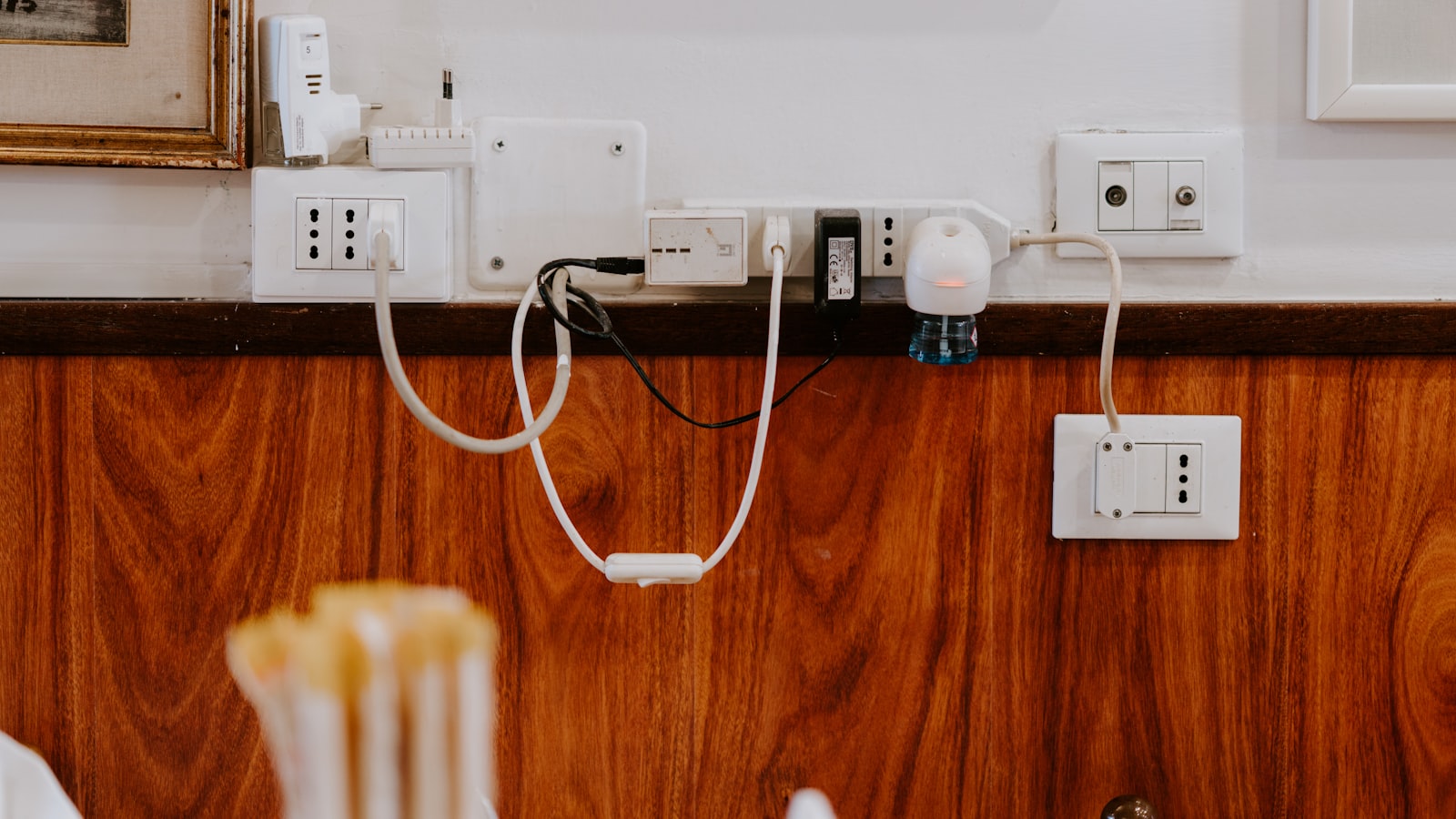
Yes, and there is no way to avoid it. A smart plug cannot be told to switch on if it is not listening, so it stays connected to your network at all times. Keeping that radio awake costs power, and the plug draws that trickle constantly, whether the appliance connected to it is running, switched off, or not plugged in at all.
The short version: a single plug's standby draw is small enough that most people can ignore it, but it is real, it never stops, and it scales with how many you own. The mistake worth avoiding is fitting a smart plug to save standby power on something that barely uses any.
How much it actually draws
Most Wi-Fi smart plugs sit somewhere between roughly half a watt and a watt and a half when idle. Where a given plug lands depends on its radio, its chipset, and whether it is running energy monitoring in the background. Manufacturers rarely publish the figure, and independent measurements of the same model vary, so treat any single number you read as indicative rather than a spec.
To turn that into something you can price, one watt drawn continuously works out at about 8.76 kWh over a year. That is one watt, times 24 hours, times 365 days. Multiply by whatever you pay per kWh and you have your answer, which is the only sensible way to do this given how much electricity rates differ between countries.
One plug, then, is a rounding error on most bills. The number that changes the picture is the count. Ten plugs at a watt apiece is roughly 88 kWh a year, drawn silently and permanently, and at that point it is worth knowing about.
Why the radio is where the money goes
Wi-Fi is the costly part. A Wi-Fi plug keeps an active association with your router, wakes regularly to check for traffic, and holds a cloud connection open so the app works when you are away from home. That is a lot of talking for a device whose entire job is to close a switch.
Plugs built on Zigbee, Thread or Z-Wave idle considerably lower, because those radios were designed around battery-powered sensors that must last years. A Thread plug like Eve Energy is doing far less work to stay reachable than a Wi-Fi one. The trade is that it needs a border router or hub, and that hub is itself a mains-powered device drawing several watts. With two plugs you have shifted the consumption somewhere else. With fifteen, the low-power radio genuinely wins.
Energy monitoring adds a little on top. A plug like the Tapo P110 runs a metering chip continuously to report consumption, which is not free. It is a small addition, and if you are using the data to find what actually costs you money in the house, it pays for itself many times over.
The trap: policing something that draws nothing
This is where smart plugs get bought for the wrong reason.
Fitting one to a device with genuine standby draw is a clear win. An older games console, an AV receiver, a laser printer holding its fuser warm, a television with a fast-start mode enabled: these can idle anywhere from a few watts to well over ten, and cutting power to them saves far more than the plug spends.
Fitting one to something that already draws close to nothing does the opposite. A modern LED lamp that is genuinely switched off, a phone charger with no phone attached, a device with a properly designed standby mode pulling a tenth of a watt. Add a plug drawing a watt and you have tripled or quadrupled the idle consumption of that socket, then congratulated yourself on saving energy. It is a common and entirely understandable mistake, and it is worth checking before you buy.
If you want to know which category something falls into, measure it. That is the strongest argument for buying a plug with energy monitoring first: use it to audit the house, find the handful of appliances that genuinely idle high, and then decide where the rest of the plugs should go.
When the standby draw is worth caring about
Three situations change the maths. If you are running a lot of plugs, the total stops being trivial. If you are off-grid, on batteries, or sizing a solar system, a permanent parasitic load matters far more than it does on a mains connection, because you are paying for it in storage capacity rather than pennies. And if you have plugs sitting in sockets doing nothing, controlling appliances you removed months ago, they are pure waste. Pull those out.
For everyone else, on a normal grid connection with a handful of plugs, the honest answer is that the standby draw is not worth losing sleep over. Buy smart plugs because you want automation, scheduling, or remote control. Buy them to find and kill the real energy hogs in your house. Just do not buy them believing the plug itself is free to run, because it is not.
Our full guide to smart plugs covers what they can and cannot automate, and the safety limits that decide what you should never connect to one.
Affiliate note. The product links here are affiliate links and we may earn a commission at no extra cost to you. Commission never buys a recommendation. How we research and score.
Frequently asked questions
- Do smart plugs use electricity when nothing is plugged into them?
- Yes. The plug's own electronics run whether or not anything is connected to the socket. It has to keep its radio associated with your network so it can hear the command to switch on, and that connection has to be maintained continuously. An unused smart plug left in a wall socket is still drawing power, which is a good reason to take out any you are not actually using.
- How much electricity does a smart plug use?
- Most Wi-Fi smart plugs draw somewhere in the region of half a watt to a watt and a half in standby, depending on the model and on whether it is doing energy monitoring. A device drawing one watt continuously uses about 8.76 kWh over a year. Apply your own electricity rate to that and you will usually find a single plug costs very little. Ten of them is a different conversation.
- Does a smart plug save more power than it uses?
- It depends entirely on what you put it on. Switching off something with a real standby draw, like an older games console or an AV amplifier that idles at several watts, puts you comfortably ahead. Putting one on a device that already draws almost nothing when idle makes things worse, because the plug now consumes more than the thing it is supposed to be policing.
- Do some smart plugs use less standby power than others?
- Yes. Wi-Fi is the expensive radio, so plugs using Zigbee, Z-Wave or Thread generally idle lower. The catch is that those need a hub, and the hub draws power of its own, so with one or two plugs you have moved the consumption rather than removed it. Across a dozen devices the low-power radios start to win properly.
Products mentioned
- TP-Link Tapo P110 Mini Smart Wi-Fi Plug with Energy Monitoring
The default cheap smart plug for Alexa and Google homes, and the one to pick if you want a rough answer to what an appliance costs to run. Treat the energy figures as indicative, not metering. If you are on Apple Home, or you want Matter, buy the P110M instead.
- Eve Energy (Matter) Smart Plug
If you already have a Thread border router, this is the plug to buy and the trade-offs are mostly about money. If you do not, buy the hub first or buy a different plug, because the Matter version has no Bluetooth fallback and will not run without one.
- Amazon Smart Plug
Buy it only if you are certain your home will stay Alexa-only. In that one case the setup really is trivial and it does the job. Everyone else is better served by a Kasa, Tapo or Meross plug that costs the same or less, works with every major platform, and actually reports how much power the thing is drawing.
More on energy
- Can You Use a Smart Plug With a Space Heater?
Manufacturers genuinely disagree, so check yours. But the electrical rating is the smaller question. The one that matters is whether a heater should ever switch on while nobody is in the room.
- Do Smart Thermostats Actually Save Money?
Sometimes, and it depends almost entirely on how you heat your home now. If your timer is already well set and you turn the heating down when you go out, expect very little.
- Do Smart Thermostats Work Without Wi-Fi?
Yes, for the part that matters. The schedule runs on the thermostat itself, so your heating keeps working when the internet drops. What you lose is the app, geofencing and voice control.
- Smart Plugs: What They're Good At, and What They're Not
The cheapest way into a smart home, and the easiest to waste money on. What a smart plug can genuinely automate, what it can't, and the safety limits that matter.
Affiliate disclosure: we may earn a commission when you buy through links on this page at no extra cost to you. Read our methodology.